Showing posts with label spain. Show all posts

30 March, 2014

An Encounter with author John Brierley on the Camino de Santiago

Note: This article was submitted and appeared on the Winter 2014  issue of La Concha, the official newsletter of the American Pilgrims on the Camino (APOC).

Surely the tall, lean man with graying hair, and a kindly face accentuated by thick, bushy eyebrows had heard the question countless times before. He must have anticipated it, thus in response to my friend Jade's inquiry, he smiled gently and answered, “Yes, I am John Brierley”.

Our chance encounter with the famous author of the “A Pilgrim's Guide to the Camino de Santiago” guidebooks occurred midway between Melide and Ribadiso on a brisk mid-October afternoon. Since the start of our camino two days ago in Sarria, Jade and I had overheard snatches of conversation among fellow pilgrims along the lines of “Do you know the author of those guidebooks that everyone seems to be carrying around? He and his wife just passed by ten minutes ago”, usually followed by a general description of the couple (both tall and trim, with matching packs).

Initially, I dismissed this talk as a case of mistaken identity, or wishful thinking. At the same time I took a harder look at the author's photo on my guidebook's inside cover (yes, I was one of the above-mentioned “everyone”), just in case.

And now, Jade and I had overtaken a couple matching their description, decided to be bold and the inevitable question had been asked. John Brierley and his wife Ann were gracious in conversing with us, and indicated their hike was an annual ritual to research updates (e.g. new albergues) for both the Camino Frances and Camino Portugues guidebooks. John took great delight in knowing that while I focused on the practical matters outlined in each chapter, Jade concentrated on the internal reflections posed in the “Mystical Path” section. Ann burst out laughing when I jokingly asked how it felt being married to a rock star.

Moreover, the author peppered us with questions about our Camino (first timers), our route (Sarria to Santiago), how our experience was going so far (splendid), and so on. Our brief encounter ended when passing pilgrims vied for his attention, and we said our goodbyes and carried on.

Later, the skies opened up as we approached Ribadiso. The light drizzle continued into the night, and as Jade and I discussed the past few days events over grilled octopus and wine, we agreed that meeting the Brierleys was undoubtedly one of the highlights of our Camino, and something that made our first-time pilgrimage even more special.

09 November, 2011

Cheapskate Chronicles: Free Walking Tours in Europe

Imagine arriving at the latest European city on your itinerary, checking into your hotel or hostel, and feeling somewhat disoriented by your new surroundings. How then to regain your bearings? Speaking from my personal experience traveling for 5 1/2 months all over the Continent, here's a simple recommendation: Join a walking tour. 

I've found that joining a walking tour gives me the confidence in navigating my new city (or at least lets me know which way is north or south), provides an overview of the city's attractions, and is a fun way to meet other travelers. All this in the couple of hours it normally takes.


For those carefully counting their pennies, you'll be glad to know that a revolution has swept all over Europe that has proved to be a boon to budget travelers - the concept of the FREE walking tour. Yes, that is correct, sir - young, motivated entrepreneurs in a vast number of European cities have decided to show you the highlights of their home town for the grand sum of zero. I took 15 such free walking tours in 11 different cities (spread over 7 countries) and can attest to the knowledge of the tour guides, and they make it FUN instead of simply overloading your brain with historical facts. 


I know you're thinking - "What's the catch? They can't give free tours for nothing?!". That is true, to a certain extent. The guides tell you upfront that they are working for tips (which makes them pull out all the stops), thus if you enjoyed yourself a gratuity at the end is much appreciated. 


Some tour companies (especially in Spain and Germany) also offer more specialized walking tours for which they charge money. Thus, by getting you to join their free offering, they hope that you will become aware of their company and be enticed to sample their other tours. For example, in Berlin Sandemans offers a bewildering array of tours: Third Reich Berlin, Sachsenhausen Memorial, Red Berlin, and even a day trip to Potsdam. 

Without further ado, below are the 15 such free walking tours in 11 different cities that I went on, and my general opinion. I'm sure there are even more free walking tours in other European cities that were not part of my itinerary (Paris, Amsterdam, London, Prague come to mind), so feel free to mention them in the comments section.


Spain

Madrid - I wrote a blog post about Sandeman's free walking tour which leaves from Plaza Mayor every day, and is offered in English and Spanish. (I took the Spanish tour). The Tapas Experience is also worthwhile for sampling Spain's culinary delicacies at four different places. 

Seville - Pancho Tours offers two free walking tours that cover different parts of this magnificent Andalusian city. Most of the guides are young Europeans from other countries who have lived here for years. Bring lots of water - it can get really, really hot in Seville

Barcelona -  Ah, everyone's favorite city in Spain, so it seems. Competition is intense in the free walking tour business here, but I was pleased with Runner Bean's Gaudi tour (which every fan of the famous architect should go on).

The Old City walk covers a lot of ground, including the Gothic Quarter. My tour took almost 3 whole hours since the guide just loved to share information about the sights. 


Lisbon, Portugal


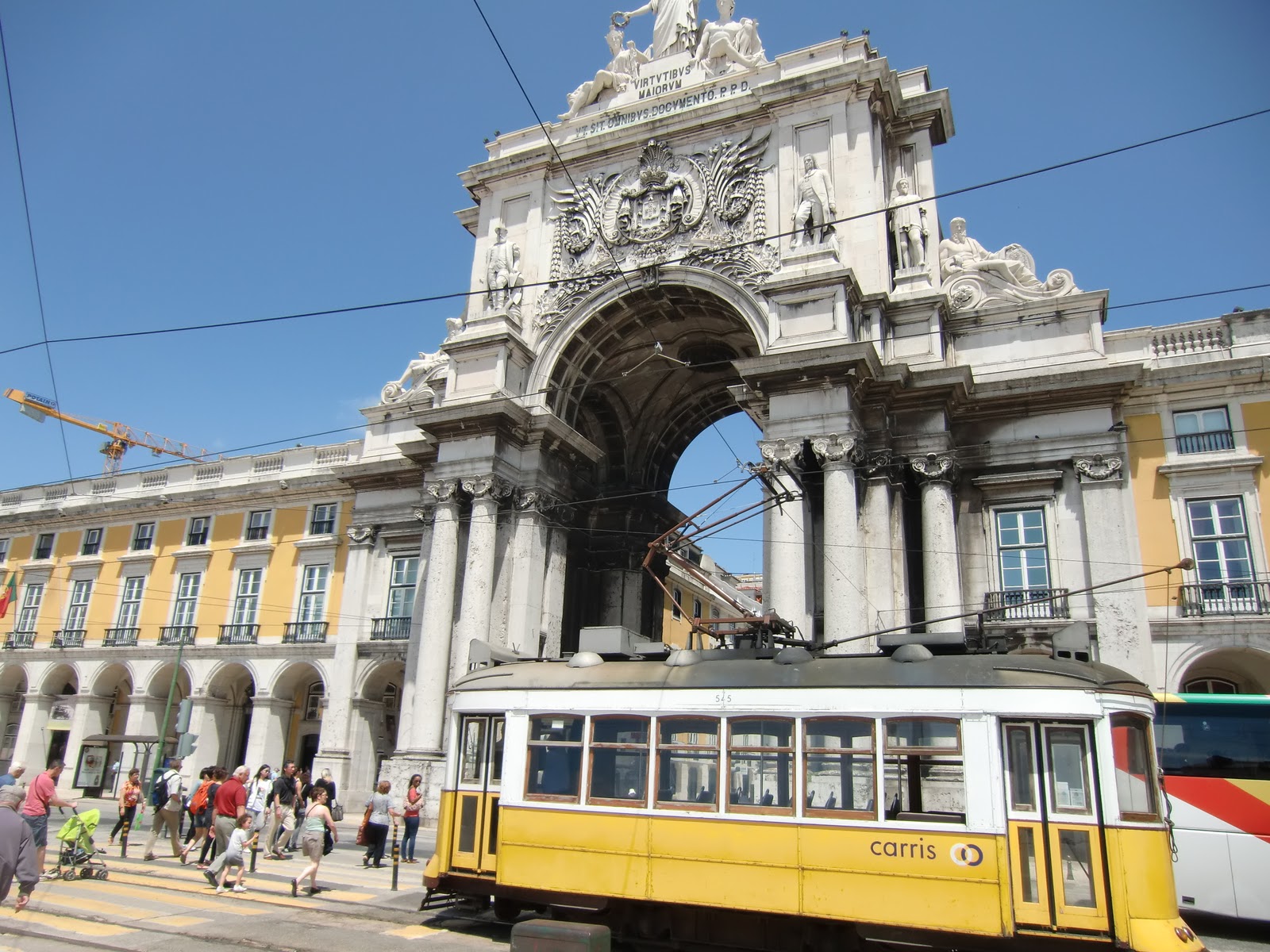
In Lisbon, Uwe (a transplant from Austria) gives an offbeat, entertaining, and sometimes sarcastic view into Portugal's sprawling capital city on his dramatically named "See Lisbon Or Die" project. The tour takes you through the Chiado, Baixa and Alfama neighborhoods, and he will even ride with you on the famous No. 28 tram and advise you how to avoid getting pickpocketed. 

Budapest, Hungary


Confusingly, there are two competitors with similar names in Budapest - Free Budapest Tours and Free Budapest Walking Tours, in the mornings and afternoons with meeting points near each other in central Budapest. The guides speak excellent English, and will recommend restaurants serving authentic Hungarian goulash and fashionable nightspots.


In addition to the standard city overview walk, they also offer specialty-themed tours (also for free) like the Communist Walk. Led by locals who suffered under the oppressive Soviet regime, this tour was quite informative and would interest anyone who wanted to learn more about this part of Hungary's history.

Belgrade, Serbia


In my book, Belgrade doesn't offer much in terms of sightseeing, but that's no excuse to miss out on the 2-hour free walking tour offered five days a week, meeting at Republic Square (by the statue in front of the perennially closed National Museum). 


My tour was led by a lovely female student who spoke great English, and included a walk up to the old fortress. But what made the tour memorable was the huge downpour that made us all scramble for shelter underneath a pavilion inside the park, trying to huddle together while shivering from the cold rain. The thunderstorm passed and we went on with the tour without skipping a beat. 


 Berlin, Germany

If you needed solid evidence that Berlin has become Europe's third-most visited city, then witness the crowds that show up for Sandeman's free Berlin walking tour at 11am.  In all the other cities that I've joined a free tour, the participants numbered anywhere between ten and forty people, but when I strolled towards the Starbucks near the Branderburg Gate and saw the hordes of humanity, it was quite astounding. Over a hundred people were there, and were subsequently divided into three smaller manageable groups led by a different guide. The 3 1/2 hour tour covers Berlin's highlights, including the Jewish War Memorial (pictured above), Hitler's bunker, and of course, the Wall. 


For a peek inside the funky Berlin underground scene, Alternative Berlin offers their free tour twice a day, at 11am and 1pm. Be prepared to experience a lot of graffiti on this walk which does involve quite a bit of walking. Tour ends at a nice beach bar near the East Side Gallery where cheap drinks are available. To get my nightlife fix, I also took Alternative Berlin's "Anti-Pub Crawl" which went to a few "interesting" local hangouts which make Berlin the cool spot that it is.


Romania

Brasov - One of the nicest cities in Transylvania (in fact, the city's slogan is "Probably the best city in the world") can easily be covered in a day, although you'd probably want to linger for at least a couple of days. The guided tour goes outside the medieval city walls for a climb up the Black Tower (which isn't black) to get an amazing bird's eye view of the city. Another worthwhile activity is to hike up to the Hollywood-style "Brasov" sign on top of the hill. 

Bucharest - It's one big concrete jungle, teaming with stray dogs to boot, but maybe the free Bucharest tour will make you appreciate this rather charmless city. Unfortunately, our local guide was lacking in charm as well, and merely recited facts about Bucharest in a straightforward manner. Yawn.


Rome, Italy

Ah, the Eternal City. Either you love it or you hate it. Crowds, noise, pollution - they're all present. You can spend days walking on your own, seeing the sights, but why do so when there are two companies offering a free walk. 

Rome Free Tour offers three different walks - Vatican, Colosseum and City Center.  I took the Vatican Walk which met at the Spanish Steps and crossed the Tiber to the Vatican City. The guide (a man) was somewhat dull, and we lost a few people along the way. 

In contrast, New Rome Free Tour offers only one free walking tour which concentrates on ancient Rome. I loved this tour, especially since we visited a few lesser-known churches (S. Andrea delle Fratte, anyone?) and the guide pointed out their unique features (e.g. painted-on ceiling). Not only that, after a look inside the Pantheon, he organized a coffee break at La Casa del Caffe, one of Rome's highly-rated cafes, and treated all tour participants to either an espresso or cappuccino. How I wish all free walking tours worked like this!

16 August, 2011

Chance Encounters of the Random Kind

One of the great pleasures of traveling is meeting new people under unique circumstances. Since I've just crossed the three month milestone on this European mega-trip, it's time to reflect on the new friends I've made along the way, and our mostly fun shared experiences.

I recall a few occasions when I've met a person and subsequently bumped into them somewhere else, and laughed at the coincidence. What's more, all these instances involve friends I've made through the English language volunteer sessions in Spain and Germany (documented here, here and here) that I've participated in.

So, without further ado, some unexpected chance encounters that turned out to be quite fun.

No. 1.  Sitting in the common room of the Posada de las Huertas hostel in Madrid, intently doing trip research on my laptop, I turned to the young woman sitting at the adjacent couch and made a remark about the erratic Wi-fi signal. She agreed, and we chatted briefly about our travels, past and future, around Spain.

The following day, I was hobnobbing with fellow volunteers at the tapas reception for the English language program, enjoying my fourth glass of sangria when I noticed an attractive latecomer entering through the door and joining our group. A familiar face, but from where...could it be?! All doubt was removed when she glanced in my direction and  a similarly shocked expression registered on her face. Yes, the girl last night at the hostel.

Introductions dispensed with, Rebecca and I discovered we were part of the same group volunteering for a week in Valdelavilla, and became fast friends henceforth.

No. 2. Although we were staying at the same dormitory at the hostel in Sevilla, I only formally met Chelsea when we were seated next to each other at the flamenco show. Afterwards, the two of us went for a few drinks, and I suppose I extolled the virtues of Vaughan Town's language program a bit enthusiastically, so much so that she immediately filled out an application form online once we got back to the hostel.

The following day, I left Sevilla without having the opportunity to get her email address, and from time to time idly wondered if Chelsea was accepted as a volunteer, and if so, for which week and location.

Two weeks and three cities later, after a full day of sightseeing in Oporto, I was at the Rivoli Hostel's lounge uploading photos, trying somewhat unsuccessfully to block out the noise from a group of seven women talking and laughing loudly. After a few minutes, I  realized that an Aussie-accented voice, the loudest among all, sounded a bit familiar, and took a closer look at the long-haired blonde that was the source of it, whose back was turned to me. Yes, it was indeed Chelsea, by coincidence staying at the Rivoli hostel as well.

Moreover, it turns out that despite her preference for a different venue and date, Vaughan assigned her to the same program that I was participating in (my second) due to a last minute cancellation by another volunteer, thus the fun times continued for an entire week.

No. 3. I noticed the Orthodox church in the main square of Brasov (Romania) due to its lovely architecture, and well, also because it was beside the unmissable KFC outlet. I decided to wander in for a look and compare the interiors with another Orthodox church I had seen in Timisoara a week prior.

After a couple minutes inside (worshipers are treated to the heavenly aroma of the Colonel's crispy chicken), I went out and was greeted by the sight of a familiar figure twenty feet away. It took a couple of seconds to recover from the shock, then I chuckled and  said to myself, "Surely this is too good to be true...", before finally calling out, "Hey, HOLLY!!!".

Yes, for it was none other than Holly and her husband Terry, who were traipsing around Romania, and by sheer luck our paths crossed. Holly was a fellow volunteer at the inaugural English language program held in Germany's Black Forest area only a couple of weeks ago, and was quite prodigious in figuring out some of the nearby hiking trails and sharing with the rest of our group. After catching up a bit, we reconvened later in the evening to join the free walking tour around Brasov (being avid walkers, they had already covered most of the ground by themselves, but it was all new to lazy me), followed by a 3 hour Mexican dinner paired with the local wine.

15 July, 2011

Pick your Pintxos in Old Town San Sebastian

"Choices, choices...", I sighed, as I surveyed the numerous plates laid neatly side-by-side on the bar at Tamboril, a restaurant just off the main square in old town San Sebastian. "So many pintxos to try", referring to the elaborately-prepared, colorful bite-sized creations that rested on each plate, "and only three meals a day".

Tamboril was the second stop on my lunch hour, preceded by a drink of txakoli (a cloudy white wine) and a taste of two dishes at another bar. Known as tapas in all of Spain, these appetizers were referred to as pintxos in San Sebastian, a charming seaside city located in the Basque country, a region in the northern part of Spain where the eponymous language rules.

In Basque country, there is a unique way of presenting and ordering pintxos. Instead of the dishes being enclosed inside a glass case, tradition dictates that they be laid out on the bar. Patrons are handed a plate and go from one end of the bar to the other to pick whatever pintxos appeal to their eyes and stomach, socializing along the way with other customers.

Once they have finalized their choices, depending on the bar, the attendant either adds up the bill based on the price of each dish (if prices are not the same), or waits until after the patron finishes eating and simply counts the number of pintxos consumed. The latter was more prevalent in the past, but since it wasn't quite fool proof (i.e. toothpicks stuffed inside pockets were not uncommon), thus I experienced it only once.

With all these dishes begging to be tasted, I decided that instead of eating sit-down meals at restaurants, a more ideal strategy would be to go on a pintxo crawl for every lunch and dinner during my visit to San Sebastian.

In addition to variety, the pick 'n choose method eliminated the guesswork involved in choosing food from a foreign language menu, and made for quicker meals - in just half an hour you're done and off to the next joint. For lunch and dinner I'd hit three different places, ordering a couple of pintxos in each one, along with a drink which was either the above-mentioned txakoli or low-alcohol cider.

Ah, the selecting part - that's where I was gripped by moments of indecision, especially if they all looked delectable. One personal guideline is to opt for the more elaborate creations (as the pics hopefully illustrate) instead of the more typical croquettes, Spanish omelet or jamon iberico straddling a piece of bread. Or sometimes I'd chose based on how colorful a particular pintxo looked, and hope for the best.

Newbies to the Basque pintxo culture could be forgiven for being squeamish at the thought of other people's errant fingers brushing against adjacent pieces of food, or wonder exactly how many hours the pintxos have been sitting around, but unlike other regions of Spain, tradition has overcome efforts to eliminate the practice here.

Another surprising part is that waste (napkins, toothpicks) are simply disposed of by chucking them on the floor. However, it is said that the quality of an establishment could be measured by how much detritus adorned its floors.

With the concentration of establishments in old town San Sebastian, It's quite hard to chose among them. There are a couple of ways around this - one can take a somewhat pricey two hour pintxo tasting tour with like-minded foodies that goes to five or six different bars and samples two or three dishes at each one.

A cheaper alternative would be to spend significant time, as I did,  in between meals consulting the website Todopintxos which suggests various routes for pintxo discovery, and where voters rate individual dishes and places. The effort is very much worth it, this I can personally attest to, as I smile at the memories of the delicious pintxos and pat my stomach contentedly.

Click here for more posts from Spain.

26 June, 2011

Alhambra in Granada

I wasn't that quite enamored with Granada, despite glowing feedback from other travelers I've met. Perhaps it was because I was coming off an emotional high from Valdelavilla, but more likely the intense heat that made walking around a miserable affair. 

My hostel was situated in the Albayzin, an area with narrow, unmarked and uphill alleys filled with Moroccan tea houses and shops. In fact, it felt like being in Morocco at times, and fortunately it was only a few minutes hike up to the Mirador de San Nicolas, a popular hangout at sunset for the great views.


That big palace on the cliff is the Alhambra, the star attraction in this city. Perhaps the most well-preserved of all Moorish architecture in Spain, over three million tourists visit the expansive grounds and palace every year.

As you can imagine, it pays to buy your ticket online in advance. I logged in on a Saturday and the earliest availability was for Wednesday evening, which worked out just fine. Alternatively, people have reported success by showing up early (around 7am) to join the queue. 

There's not really much else to say about the Alhambra that other people haven't already said. Even if you're not into palaces and architecture, the Alhambra is well worth spending a few hours in.  It does live up to all the hype, and one can only marvel at the intricately carved and colorful patterns adorning the walls.


23 June, 2011

Don't Stand so Close to Me

Watching a live bull fight for the first time is quite mystifying, especially if you're almost totally ignorant on the topic but have only heard heated arguments on the pros and cons of this spectacle. 

Apparently, one of the trademarks of an excellent torero (or matador in English) is how close he is willing to stand near a specially-bred toro bravo, provoke it to rush at him, laughing in the face of physical injury or worse, death. Pure insanity, if you ask me, but part and parcel of this slice of Spanish culture. 

Here's a short video to illustrate the artistry and skill of our torero, as he shows his mastery over the wounded bull.  As you can see, my advice has fallen on deaf ears.


Click this link if embedded video doesn't show up.

These theatrics go on for a while until our protagonist has judged that the bull is ready to be put to death. He then takes out his sword (cleverly hidden behind the cape) to strike the final blow. Sometimes though, these proud and hardy bulls are tough to put away. 

Below, the bull has the sword sticking out of his back, but is improbably still on his feet. The torero's assistants wave their capes furiously to make him even more dizzy and weak. After all, their boss has to get his applause from the crowd. 


Click this link if embedded video doesn't show up.

On a slightly more gruesome note, after the inevitable has occurred,  the clean-up crew comes to take the bull out of the ring, a final indignity suffered by the brave beast. Then it's on to the next round at La Maestranza. 


Click this link if embedded video doesn't show up.

14 June, 2011

A Star is Born in Valdelavilla - Part III

"I LOVE blondes!!!", screamed Greg, as he turned around after zipping across the room like a madman, his arms raised to the skies for dramatic effect. "Blondes with long hair and boots and short skirts and a big chest...". Then, using his normal voice, "That's how you should do it. You're being too normal".

I glared at him through the black-rimmed glasses straight out of Harry Potter that he made me wear ("it's funnier"), and wished this would all end soon, before physical and mental fatigue overcame me.

We were in the third hour of rehearsals for the Valdelavilla Players' most ambitious production yet, a fifteen-minute collage of scenes from Woody Allen's "Play It Again, Sam", with yours truly cast in the title role of Allan, a whiny neurotic whose wife recently left him. (Woody himself played the role in the movie, those were the days).

Showtime was but two hours away, and the cast hadn't gotten down their parts yet. As the lead star, I bore the brunt of Greg's criticism, and his caustic mood was made worse by an abscessed tooth. Every little mistake that David, Rebecca, Laura or myself made irritated him. Moreover, being a former professional theater director, Greg was used to working with real actors, not "normal" language volunteers who shirked from the spotlight - heck, I never even gave Powerpoint presentations at work, and now I was tasked to play a character who alternated among three different moods - neurosis, whining, and dream-like fantasy.

I admit that I was flattered when Greg approached me on the second day, and broached the idea of having me play Allan. "You can do it, I'm sure of it", were his exact words. He continued, "Besides, you're the only option I have - the only other male Anglo is too old to play a 29-year old character". I consented to do it, in the spirit of camaraderie with every volunteer and program participant in Valdelavilla, despite the absence of any acting experience whatsoever.

But now, as he barked at me to run onstage from the sofa to the chair at the corner, to give "MORE, MORE, MORE" in acting hyper, full of pent-up energy, I had second thoughts. However, it was too late to cancel now, and I would let everyone down, so I resisted the urge to scream back at him, told myself to calm down, and just soldiered on.

eagerly awaiting our production of "Play it Again, Sam"
So, we rehearsed, over and over. And got better, step by step. At some points I could even hear Greg laugh out loud as we ran through the scene. I made a few more boo-boos, mostly due to overeagerness (maybe I was turning into Allan!) in reciting my lines without waiting for my co-stars' prompts, but laughed them off.

Finally, we were ready for the big show. Or as ready as could be. I took the stage and sat on the right hand side of the sofa, agitated and fumbling nervously, waiting for my friends' knock on the door.

The rest was a blur - pacing around the stage, reciting my lines (which I had mostly memorized, though we were allowed to read from the script), screaming at the top of my voice to drown out Linda's phone conversation as she tried to set me up, trying to remember Greg's litany of advice (e.g. wait for laughter to stop before proceeding with next line, run from one spot to another WHILE saying your lines), and just acting like the crazed person my character was supposed to be, and then switching to the deflated whiner mode when reminded of my failures.At various key points, I heard Greg's distinctive laugh rising above the other audience members', and smiled a little in self-satisfaction.

Then just like that, it was over. The cast joined hands for the traditional bow to uproarious applause. At dinner time, the other participants took their turns to shake my hand and offer their congratulations. Clearly, my laid-back demeanor did not inspire much confidence in delivering an incredible performance.  No, I repeated over and over, I had never acted before. "Get out of here", I responded with a big smile to those who suggested that I should consider exploring community theater as a career option, adding, "all that red wine must be clouding your judgement".

The kudos flowed even during the after-dinner scene. Several barflies, including B., a drama teacher, pronounced myself as having rendered the Best Performance in a Lead Role in a Musical/Comedy among the three nights of entertainment at Valdelavilla, and even my tormentor Greg took me aside, and said "We did it. I had my doubts after the first thirty minutes of rehearsal, but you improved so much. Now you're the talk of the (tiny) town".

Don't bother looking for Youtube videos. Sadly, there is no video nor photographic evidence that documents this epic event. I still don't know how I pulled through without any nerves, staying as cool as a cucumber*, nor why I bothered to stay up till 2am memorizing the dialogue. Perhaps if career opportunities in the Informatics field dry up, a niche playing Woody Allen characters onstage might not such be a bad idea.

*"fresco como una lechuga" in Spanish, literally "cool as a lettuce", since cucumber is pepino. Not sure how this came about.


Click here for more posts from Valdelavilla.

31 May, 2011

A Day in the Life at Valdelavilla - Part II

"Do you really have to talk for ten hours a day, to a non-native English speaker no less?" is probably the top FAQ when informed of my Vaughan Town week-long volunteer program at Valdelavilla, usually expressed in a tone of incredulity.

The answer is YES. Much more than ten hours, actually. The day starts with the 9am buffet breakfast (including churros), and then the next 4 hours are devoted to one-on-one conversation sessions with a Spaniard. So what do we talk about? For each hour, phrasal verbs (e.g. "to back up") or idioms (e.g. "to sleep on it") are assigned for discussion - these can be challenging and a bit nonsensical, I thought, so in some cases I preferred to let the conversation flow instead of talking about them.

Vaughan Town also recommends bringing some conversation starters or aids - playing cards, games, and the like. While I did print photos from previous travels, they were only used as a last resort. The key is to be creative and tailor the conversation around relevant topics given the person's background - for example, having heard Javier mention that he had been on business trips to Japan, I dug up photos of ryokans (traditional Japanese-style inns) and recounted my experience staying at a capsule hotel in Tokyo. Or if financial markets are your forte, then a lively discussion with Jose Luis (the most talkative Spaniard) to dissect Ben Bernanke, interest rates, the EU debt crisis and other weighty topics. And every chance I'd get,  I'd talk about the Roger vs. Rafa rivalry, and the ongoing Roland Garros (French Open to you non-tennis enthusiasts) tournament. I bet none of the other Anglos went within a mile of these topics.

After these grueling sessions, the meals come as a welcome relief. I shouldn't complain, since given the imbalance in numbers we Anglos get a free hour now and then while the Spaniards don't. Meal times can be complicated as well, since the program director ensures that there is a mix of Anglos and Spaniards at each table, so that they resist the temptation to lapse back to forbidden Spanish.

As advertised, the staff prepares a sumptuous three-course meal (appetizer, main course, and dessert) accompanied by wine, and the food was generally excellent and plentiful. (A very minor quibble: Perhaps the organizers might look into offering a rotating selection of riojas and ribera del Dueros instead of the same red all week long). However, the conversation never stops during meals, and after a few days some Anglos would exchange knowing grins upon overhearing this volunteer go on about her cruise ship experiences yet again, or avoid being stuck at the same table with this loud, whiskey-swilling woman from Manchester.

Ample time is given (1.5 hours) to recover, both from the heavy meals and conversation fatigue, during the siesta. I tended to sit in my room reading or taking a nap, especially after the "grind" got to me. We then reconvened at 5pm for a group activity, typically games or dance lessons, which are followed by more one-on-one sessions and/or mock teleconferences.

At 8pm, a nightly entertainment show is put on by the Valdelavilla Players, which consists of - who else? - the volunteers. Don't be surprised if Greg, a professional theater director who moonlights as the master of ceremonies for these sessions, pulls you aside during the day, explains the role he wants you to play, and before you know it you've committed to rehearsals,  enduring his constant caustic remarks and endless quest for perfection. Whatever notions of having a relaxing week should have disappeared by now.

Dinner follows at 9pm, another three courses and much more wine (now we REALLY need it). Although entirely optional, people whose energy levels show no signs of flagging hang out at the bar (there is only one in Valdelavilla), talking, talking, talking...until the clock strikes midnight when the staff kicks out everyone.

After the first day or two, the Spaniards start warming up to the Anglos, and more importantly, start understanding their accents, and become more comfortable expressing themselves in English. Though most were sent by their respective companies to attend this rigorous eighty-hour session, a few paid the hefty fees out of their own pockets (I also heard some got a last minute fifty percent discount), for which I admire and salute them. With the wheels eased by alcohol, the conversations become more animated whereas during the initial stages, they'd just nod and pretend to understand. Whether or not they're even remotely interested in cruises or politics or tennis is a different story though.

If you've been keeping count, that's a total of roughly 12 hours of continuously speaking English every day (not counting siesta time). Not sure what guarantees Vaughn Town gives to the Spanish participants as far as attaining conversational fluency in English, but gaining five pounds seems to be a sure-fire thing.


Click here for more posts from Valdelavilla.


29 May, 2011

On the tapas trail in Madrid

After a hectic English language volunteer week in Valdelavilla, I came back to Madrid with my new friends, both Anglos and Spaniards. Yup, that's what being together for six entire days will do to people - we'll always look back at the fun times in that tiny village in Soria province. 

But first, plans were made to hang out over the weekend and do what everyone loves best: going for tapas in Spain, hitting a few places in one night. First up on Saturday night was MJ, who along with her boyfriend brought Rebecca, Joanne, Aileen and myself on a walk around the main sights in Madrid (whose details I won't bore you with). The food fest started at Taberna Almendro 13 in La Latina for some huevos rotos (broken eggs), pictured on the right, a concoction of sunny side-up eggs, jamon bits and potato chips.  We also had roscas de jamon, a round ham sandwich which everyone shared, washed down by vino or cerveza, of course.

David, another Spaniard on the program, met up with us at Plaza. Sta. Ana, and together we headed to another one of MJ's (and apparently, lots of other locals') favorites, Las Bravas - a casual joint specializing in Spanish fast food. The wait for a table did not deter us, and soon we were gorging on orejas (pig's ears) and patatas bravas (potatoes with spicy sauce).  

At first MJ wouldn't tell everyone about the pig's ears, preferring to keep it a mystery, but since I spoke Spanish I knew what she ordered. Any trip of mine wouldn't be complete without eating some weird animal parts, so I was quite eager to taste them. The pig's ears were pretty tasty actually, but some Anglos didn't like biting into the cartilage, so I ate more than my fair share of the dish. 

Last stop for the night was nearby Villa Rosa for some drinks and dramatic touristy flamenco. We didn't have anything to eat anymore; sometimes it's amazing how these little bites fill you up without noticing it. 

Same meeting place and same time on Sunday, but with different Spaniards - Ignacio, Antonio and Jose Luis, three of the most popular participants in the program. 

After some sightseeing we headed over to a hole-in-the-wall joint off Plaza Mayor for some bocadillos - sandwiches stuffed with meat or seafood. JL recommended the bocadillos de calamares (fried shrimp stuffed inside a roll) plus more carbs in the form of patatas bravas, which were less spicy than last night's. 

Once again, the cramped space was packed to the gills, and you can quickly become good friends with diners at adjacent tables given the close quarters. Everyone seemed intent on wolfing down their huge sandwiches in the least amount of time. . 


The tour went on to the next place specializing in mushrooms which seemed a bit hokey, with the cave-like atmosphere, but the chatty piano player who played contemporary Beatles and Pink Floyd hits ("Original Spanish music is really nice to listen to", Antonio quipped wryly), and the mushrooms made up for it. 

I forgot what exactly these were called, but our group was full at this point, and the Anglos were just clamoring for more wine, so off we went to La Latina in search of good vino. Last stop was Taberna Tempranillo on the street Cava Baja, a wine bar with an unparalleled collection of bottles and a perfect place to sip, relax and talk. 

Part of me didn't want these nights to end - it was great to discover these places and dishes that I normally wouldn't have found nor sampled on my own (given the infinite number of establishments in Madrid), but more so the pleasure of new friends' company. Here's to fun times, lasting friendships, and more English conversations. Salut!
  
Click here for more posts from Spain.

26 May, 2011

Nonstop chitchat at Valdelavilla - Part I

I don't fancy myself as much of a talker; in fact I find most small talk exhausting and inane. Certainly not someone who has the inclination nor patience to engage in conversation for twelve hours a day, to non-native English speakers no less. 

Yet Sunday afternoon found myself and fourteen other "Anglos" in the tiny town of Valdelavilla in Soria province, which even most Spaniards have never heard of, after a three hour bus ride from Madrid. With us were eleven local Spanish people who had signed up for an intensive six-day course during which they will listen to the Anglos speak, try to figure out what in the world they are saying behind those indecipherable thick accents (yes, I'm referring to you Scots), and then respond in their best broken English. Repeat process until brain melts. Always having a drink in hand helps.

For the privilege of undergoing this torture, the Spaniards have shelled out megabucks (or their employers were snookered into doing so), while us Anglos were not exempt from being loco - we were here in Valdelavilla on a volunteer basis, and had paid for airfare and accommodations in Madrid out of our own pockets, and instead of spending precious vacation time laying on the peach sipping mojitos, giving our best efforts in explaining the intricacies of Shakespeare's language to the locals through one-on-one conversations, improvised conference calls, games, dance lessons, theater performances, and the like.

Obviously, non-stop talkers are preferred, especially altruistic ones. Doesn't quite sound like yours truly? Yes, I did think long and hard about joining the program offered by Vaughan Town, the leading player in the English language educational market in Spain, and wondered if I might become a misfit. However, the lure of free lodging and three-course meals with red wine (or white, if you insist) was irresistible, and I laughed off the fears and got onboard that bus pronto.

Valdelavilla was abandoned in the 1960s, and lay in ruins until its rehabilitation in the 1990s and is now a rural tourism complex. The town consists of about ten buildings similar to the one in the photo on the right, and it takes roughly five minutes to walk around Valdelavilla. This is about as small and idyllic a town in the entire country could be. Another claim to fame is that Valdelavilla has declared its official language as English, perhaps the only town in Spain to do so. Of course, it helps that no one actually lives here, and that most of their clientele are the busloads that Vaughn Town sends over for the English program.


It simply is quite a lovely town, the perfect escape from the hustle and bustle of Madrid, and a great place to talk non-stop for twelve hours a day, interrupted only by delicious meals and a siesta. If this sounds like your cup of tea (idiom alert!), or you're dying to recount the minutiae of your latest cruise, or you were born to explain phrases like "to put two and two together" and "to get a word in edgewise" to befuddled and bemused Spaniards, then joining the volunteer program is a no-brainer (¿qué? - Ignacio). 


Click here for more posts from Spain.
 

23 May, 2011

Finding Cheap, Good Food in Madrid

Eating out in Spain can be an expensive proposition. With tons of restaurants in the major tourist zones in Madrid (Plaza Mayor, Puerta del Sol, etc), if one isn't careful then it is easy to spend lots of money. 

Luckily, your cheapskate traveler has done some legwork in figuring out how to eat good food in Madrid for less euros. Here are a few strategies. 

Go for the menu del dia. Most restaurants offer a fixed-price daily menu during lunch time. This typically costs 9 or 10 euros, and includes two courses, bread, a drink (wine, beer or water), and coffee or dessert. If this sounds like a lot of food, well that's the idea. The dishes below aren't too shabby for the price, eh? Now you know why the Spaniards need a siesta after lunch.


Get free food. Yes, sometimes there are free things in life. At most tapas bars, ordering a drink comes with a plate of tapas, usually olives, or potato chips. 

Although not quite filling enough for a meal, this small snack can tide you over until the late dinner time - 9pm at the earliest, and even then you might have the restaurant all to yourself.

Just don't load up on the booze at one place, or the free tapas might wind up costing you. Moreover, it is customary for the Spanish to eat a couple of small plates at one place, move on to the next to sample their specialty, and so on.  Remember, when in Madrid, do as the Madrilenos do. (Or something like that).

Skip the restaurants and tapas bars.  There are a lot of small cervecerias offering bocadillos, or snacks. Usually these are sandwiches stuffed with calamari, sausages or ham, and cost as little as 2.70 euros ($4). 

Or you can go to a market like Mercado San Miguel and choose among the freshly prepared products from the different counters. At left are jamon iberico sandwiches (2.50 - 3.50 euros or $3-5) which are quite filling. 


So, as you can see, these are just a few strategies to reduce the cost of meals in Madrid. In addition, just follow common sense advice like checking a restaurant's menu before sitting down, and avoiding tourist traps. 

Be sure you're not among the hapless tourists who got snookered at this restaurant. Check out these prices - 11.50 euros for a mixed salad! And the place was packed to boot. I do get a kick out of other people getting fleeced, as well as a pang of pity.  Allow me my moment of schadenfreude as I munch on sumptuous jamon iberico washed down with vino, knowing I paid much less than for a bunch of leafy veggies.

Click here for more posts from Spain.

21 May, 2011

Cheapskate Chronicles Madrid - A Free Walking Tour

There is an adage in life,  "There is no such thing as a free lunch". Tell that to Sandeman's New Madrid Tours, which promises an exciting 3.5 hour walking tour in Madrid led by enthusiastic guides for the grand price of zero. However, the guides do work for tips, so patrons should feel free to give them a gratuity, depending on how happy or annoyed they are at the end of the tour. 

Since it seemed like a no-lose proposition, and eager to get some exercise, I found myself at Madrid's largest square, Plaza Mayor, and was given the choice between the English and Spanish tours - with no hesitation, I opted for the latter. Truth to tell, it wasn't a hard decision to make at all.

So...let me lead you on an orientation of Madrid, with some interesting and strange facts to be dished out. But first, a caveat: accuracy of translation is not guaranteed.


Plaza Mayor used to be called Plaza Real, then Plaza Constitution, and switched back and forth among these names. Currently, Madrilenos simply refer to it as the Plaza, to hedge their bets on any future name change. 

In the middle of the square is a statue of King Felipe II mounted on a horse (above). Originally, the horse's mouth was wide open, but pigeons kept getting stuck inside. Thus in one of the remodeling efforts they decided to keep it shut. 
Next, we moved on to Botin, the world's oldest restaurant, as attested to by the Guinness World Records certificate inside the glass window. I'm sure the food is pricey here due the novelty, so most tourists are content to just snap a pic. The renowned Spanish painter Goya allegedly worked as a dishwasher at Botin before he moved on to better things.

Madrid was transformed from a sleepy town into Spain's capital by the Moors, and for a long time they did not have a proper city hall. The present one at Plaza de la Villa (left) looks nice, but took all of a hundred fifty years to build - in the meantime, I imagine they simply held their meetings in each official's living room, rotating every week or so.

Why the delay? Who knows, perhaps the usual suspects - infighting and bureaucracy, plus it is simply too tempting to sit back and enjoy the nice weather and knock back another glass of sangria in this land of mañana. If you think this is scandalous (perhaps you're an American who's used to getting things done quickly), consider the Cathedral de la Almudena (middle) which took almost four hundred years, went through ten architects before completion. Now it is a mish-mash of styles of three architectural styles: Baroque, Gothic and "pop-art", based on each architect's whims. 

The photo on the far right is the Palacio Real, used for official functions held for visiting foreign heads of state. The royals no longer live here, but have downsized to a smaller palace across town by the Parque del Retiro. Tough economic times in Spain, including almost twenty percent unemployment, means cutting back for everyone. The walking tour obviously didn't allow for time to go inside the palace, but I was happy to snap a photo and move on, feeling a bit sorry for the   sun-drenched tourists queuing up at the ticket office.  


Finally, our motley crew of thirteen Spanish speaking tourists, led by the guide Mirelur, reached the spiritual but not geographical heart of Madrid, the Puerta del Sol. Despite it's name, there is no door to Sol, but it's simply a huge plaza where metro lines intersect, possibly the closest thing they have to Times Square (minus the electronic billboards, stock market ticker symbols and steaming Cup Noodles). 

Nowadays Puerta del Sol is used primarily for gatherings like strikes (I actually witnessed one the following day) and the New Year's Eve countdown. (A piece of trivia: Spaniards are supposed to down twelve grapes before the clock strikes for good luck).

Puerta del Sol is also home to probably the most photographed curiosity in Madrid - the city's proud symbol, a twenty ton bear kissing what looks like a giant stem of broccoli but is actually a madroño (madrone tree), whatever that is.  Not sure why a bear and non-native plant are considered Madrid's symbol, nor how long it took to build this statue - after over three hours of being intensely focused on listening, understanding and internally translating Mirelur's words, my mind went on a much-needed tapas and vino break. 

Overall, it was a fun introduction to Madrid - I got not only my daily dose of physical exercise, but about a month's worth of intellectual exercise to boot. Now for that afternoon siesta.


Yes, I could rationalize and mention the smaller group size for the Spanish tour (the Anglo speakers outnumbered us two-to-one), the opportunity to practice listening to the lisping accent in España, but in the end the deciding factor in choosing the Spanish tour can be seen on the left of this text. 

Mirelur is originally from Bilbao but has lived in Madrid for  a few years. Our group was only her second tour ever, but she was enthusiastic, knowledgeable, loads of fun, and most importantly, spoke clearly and not too rapidly for me. 

Granted, I could have had an easier time with the English tour, but why would I choose some guy from Philly over this winsome lass?  

Sandeman's New Madrid walking tour might be free, but this cheapskate was quite pleased, and forked out a generous tip. So there is really no such thing as a free lunch. 

Click here for more posts from Spain.