Showing posts with label madrid. Show all posts

09 November, 2011

Cheapskate Chronicles: Free Walking Tours in Europe

Imagine arriving at the latest European city on your itinerary, checking into your hotel or hostel, and feeling somewhat disoriented by your new surroundings. How then to regain your bearings? Speaking from my personal experience traveling for 5 1/2 months all over the Continent, here's a simple recommendation: Join a walking tour. 

I've found that joining a walking tour gives me the confidence in navigating my new city (or at least lets me know which way is north or south), provides an overview of the city's attractions, and is a fun way to meet other travelers. All this in the couple of hours it normally takes.


For those carefully counting their pennies, you'll be glad to know that a revolution has swept all over Europe that has proved to be a boon to budget travelers - the concept of the FREE walking tour. Yes, that is correct, sir - young, motivated entrepreneurs in a vast number of European cities have decided to show you the highlights of their home town for the grand sum of zero. I took 15 such free walking tours in 11 different cities (spread over 7 countries) and can attest to the knowledge of the tour guides, and they make it FUN instead of simply overloading your brain with historical facts. 


I know you're thinking - "What's the catch? They can't give free tours for nothing?!". That is true, to a certain extent. The guides tell you upfront that they are working for tips (which makes them pull out all the stops), thus if you enjoyed yourself a gratuity at the end is much appreciated. 


Some tour companies (especially in Spain and Germany) also offer more specialized walking tours for which they charge money. Thus, by getting you to join their free offering, they hope that you will become aware of their company and be enticed to sample their other tours. For example, in Berlin Sandemans offers a bewildering array of tours: Third Reich Berlin, Sachsenhausen Memorial, Red Berlin, and even a day trip to Potsdam. 

Without further ado, below are the 15 such free walking tours in 11 different cities that I went on, and my general opinion. I'm sure there are even more free walking tours in other European cities that were not part of my itinerary (Paris, Amsterdam, London, Prague come to mind), so feel free to mention them in the comments section.


Spain

Madrid - I wrote a blog post about Sandeman's free walking tour which leaves from Plaza Mayor every day, and is offered in English and Spanish. (I took the Spanish tour). The Tapas Experience is also worthwhile for sampling Spain's culinary delicacies at four different places. 

Seville - Pancho Tours offers two free walking tours that cover different parts of this magnificent Andalusian city. Most of the guides are young Europeans from other countries who have lived here for years. Bring lots of water - it can get really, really hot in Seville

Barcelona -  Ah, everyone's favorite city in Spain, so it seems. Competition is intense in the free walking tour business here, but I was pleased with Runner Bean's Gaudi tour (which every fan of the famous architect should go on).

The Old City walk covers a lot of ground, including the Gothic Quarter. My tour took almost 3 whole hours since the guide just loved to share information about the sights. 
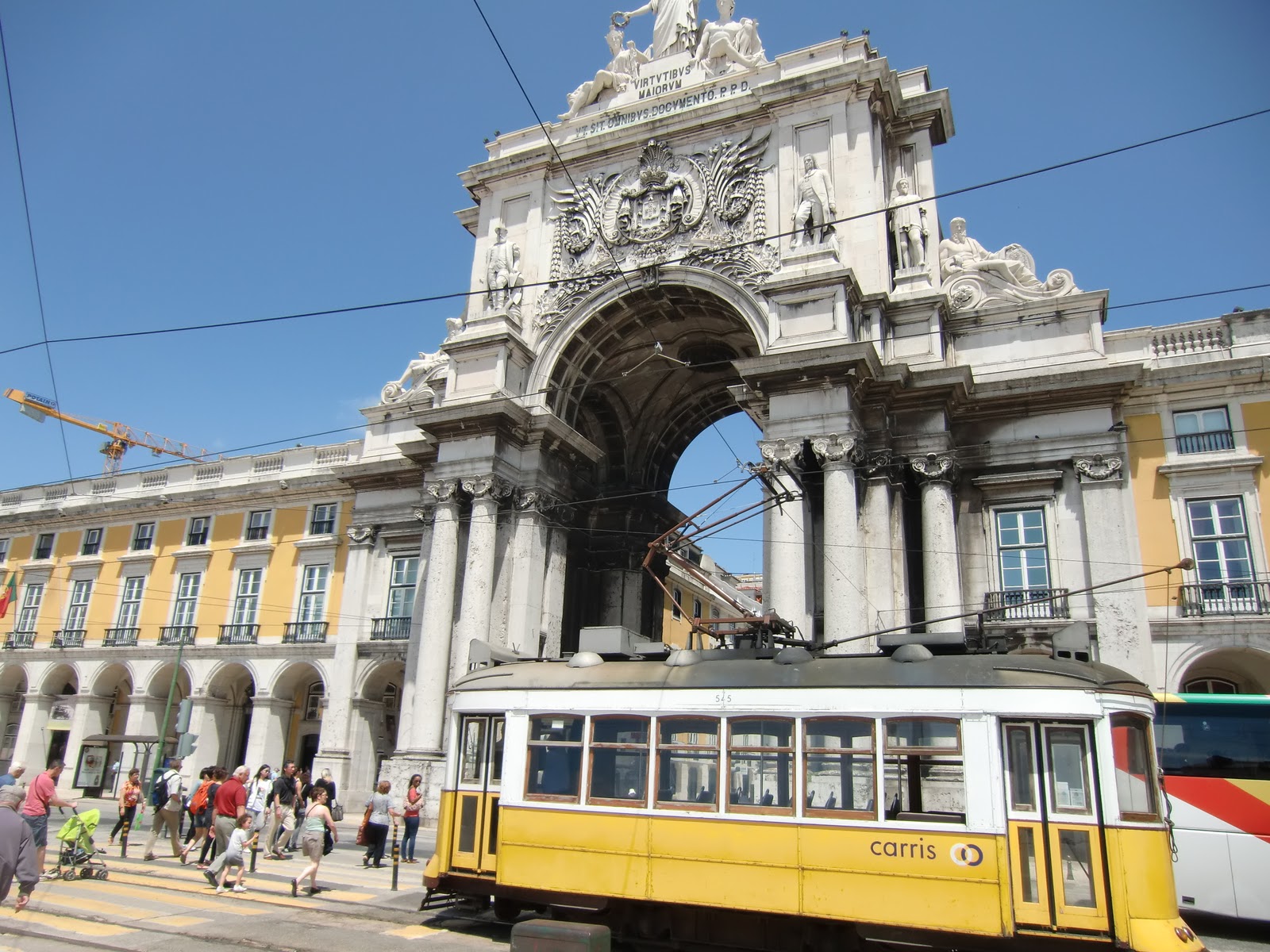


Lisbon, Portugal


In Lisbon, Uwe (a transplant from Austria) gives an offbeat, entertaining, and sometimes sarcastic view into Portugal's sprawling capital city on his dramatically named "See Lisbon Or Die" project. The tour takes you through the Chiado, Baixa and Alfama neighborhoods, and he will even ride with you on the famous No. 28 tram and advise you how to avoid getting pickpocketed. 

Budapest, Hungary


Confusingly, there are two competitors with similar names in Budapest - Free Budapest Tours and Free Budapest Walking Tours, in the mornings and afternoons with meeting points near each other in central Budapest. The guides speak excellent English, and will recommend restaurants serving authentic Hungarian goulash and fashionable nightspots.


In addition to the standard city overview walk, they also offer specialty-themed tours (also for free) like the Communist Walk. Led by locals who suffered under the oppressive Soviet regime, this tour was quite informative and would interest anyone who wanted to learn more about this part of Hungary's history.

Belgrade, Serbia


In my book, Belgrade doesn't offer much in terms of sightseeing, but that's no excuse to miss out on the 2-hour free walking tour offered five days a week, meeting at Republic Square (by the statue in front of the perennially closed National Museum). 


My tour was led by a lovely female student who spoke great English, and included a walk up to the old fortress. But what made the tour memorable was the huge downpour that made us all scramble for shelter underneath a pavilion inside the park, trying to huddle together while shivering from the cold rain. The thunderstorm passed and we went on with the tour without skipping a beat. 


 Berlin, Germany

If you needed solid evidence that Berlin has become Europe's third-most visited city, then witness the crowds that show up for Sandeman's free Berlin walking tour at 11am.  In all the other cities that I've joined a free tour, the participants numbered anywhere between ten and forty people, but when I strolled towards the Starbucks near the Branderburg Gate and saw the hordes of humanity, it was quite astounding. Over a hundred people were there, and were subsequently divided into three smaller manageable groups led by a different guide. The 3 1/2 hour tour covers Berlin's highlights, including the Jewish War Memorial (pictured above), Hitler's bunker, and of course, the Wall. 


For a peek inside the funky Berlin underground scene, Alternative Berlin offers their free tour twice a day, at 11am and 1pm. Be prepared to experience a lot of graffiti on this walk which does involve quite a bit of walking. Tour ends at a nice beach bar near the East Side Gallery where cheap drinks are available. To get my nightlife fix, I also took Alternative Berlin's "Anti-Pub Crawl" which went to a few "interesting" local hangouts which make Berlin the cool spot that it is.


Romania

Brasov - One of the nicest cities in Transylvania (in fact, the city's slogan is "Probably the best city in the world") can easily be covered in a day, although you'd probably want to linger for at least a couple of days. The guided tour goes outside the medieval city walls for a climb up the Black Tower (which isn't black) to get an amazing bird's eye view of the city. Another worthwhile activity is to hike up to the Hollywood-style "Brasov" sign on top of the hill. 

Bucharest - It's one big concrete jungle, teaming with stray dogs to boot, but maybe the free Bucharest tour will make you appreciate this rather charmless city. Unfortunately, our local guide was lacking in charm as well, and merely recited facts about Bucharest in a straightforward manner. Yawn.


Rome, Italy

Ah, the Eternal City. Either you love it or you hate it. Crowds, noise, pollution - they're all present. You can spend days walking on your own, seeing the sights, but why do so when there are two companies offering a free walk. 

Rome Free Tour offers three different walks - Vatican, Colosseum and City Center.  I took the Vatican Walk which met at the Spanish Steps and crossed the Tiber to the Vatican City. The guide (a man) was somewhat dull, and we lost a few people along the way. 

In contrast, New Rome Free Tour offers only one free walking tour which concentrates on ancient Rome. I loved this tour, especially since we visited a few lesser-known churches (S. Andrea delle Fratte, anyone?) and the guide pointed out their unique features (e.g. painted-on ceiling). Not only that, after a look inside the Pantheon, he organized a coffee break at La Casa del Caffe, one of Rome's highly-rated cafes, and treated all tour participants to either an espresso or cappuccino. How I wish all free walking tours worked like this!

29 May, 2011

On the tapas trail in Madrid

After a hectic English language volunteer week in Valdelavilla, I came back to Madrid with my new friends, both Anglos and Spaniards. Yup, that's what being together for six entire days will do to people - we'll always look back at the fun times in that tiny village in Soria province. 

But first, plans were made to hang out over the weekend and do what everyone loves best: going for tapas in Spain, hitting a few places in one night. First up on Saturday night was MJ, who along with her boyfriend brought Rebecca, Joanne, Aileen and myself on a walk around the main sights in Madrid (whose details I won't bore you with). The food fest started at Taberna Almendro 13 in La Latina for some huevos rotos (broken eggs), pictured on the right, a concoction of sunny side-up eggs, jamon bits and potato chips.  We also had roscas de jamon, a round ham sandwich which everyone shared, washed down by vino or cerveza, of course.

David, another Spaniard on the program, met up with us at Plaza. Sta. Ana, and together we headed to another one of MJ's (and apparently, lots of other locals') favorites, Las Bravas - a casual joint specializing in Spanish fast food. The wait for a table did not deter us, and soon we were gorging on orejas (pig's ears) and patatas bravas (potatoes with spicy sauce).  

At first MJ wouldn't tell everyone about the pig's ears, preferring to keep it a mystery, but since I spoke Spanish I knew what she ordered. Any trip of mine wouldn't be complete without eating some weird animal parts, so I was quite eager to taste them. The pig's ears were pretty tasty actually, but some Anglos didn't like biting into the cartilage, so I ate more than my fair share of the dish. 

Last stop for the night was nearby Villa Rosa for some drinks and dramatic touristy flamenco. We didn't have anything to eat anymore; sometimes it's amazing how these little bites fill you up without noticing it. 

Same meeting place and same time on Sunday, but with different Spaniards - Ignacio, Antonio and Jose Luis, three of the most popular participants in the program. 

After some sightseeing we headed over to a hole-in-the-wall joint off Plaza Mayor for some bocadillos - sandwiches stuffed with meat or seafood. JL recommended the bocadillos de calamares (fried shrimp stuffed inside a roll) plus more carbs in the form of patatas bravas, which were less spicy than last night's. 

Once again, the cramped space was packed to the gills, and you can quickly become good friends with diners at adjacent tables given the close quarters. Everyone seemed intent on wolfing down their huge sandwiches in the least amount of time. . 


The tour went on to the next place specializing in mushrooms which seemed a bit hokey, with the cave-like atmosphere, but the chatty piano player who played contemporary Beatles and Pink Floyd hits ("Original Spanish music is really nice to listen to", Antonio quipped wryly), and the mushrooms made up for it. 

I forgot what exactly these were called, but our group was full at this point, and the Anglos were just clamoring for more wine, so off we went to La Latina in search of good vino. Last stop was Taberna Tempranillo on the street Cava Baja, a wine bar with an unparalleled collection of bottles and a perfect place to sip, relax and talk. 

Part of me didn't want these nights to end - it was great to discover these places and dishes that I normally wouldn't have found nor sampled on my own (given the infinite number of establishments in Madrid), but more so the pleasure of new friends' company. Here's to fun times, lasting friendships, and more English conversations. Salut!
  
Click here for more posts from Spain.

23 May, 2011

Finding Cheap, Good Food in Madrid

Eating out in Spain can be an expensive proposition. With tons of restaurants in the major tourist zones in Madrid (Plaza Mayor, Puerta del Sol, etc), if one isn't careful then it is easy to spend lots of money. 

Luckily, your cheapskate traveler has done some legwork in figuring out how to eat good food in Madrid for less euros. Here are a few strategies. 

Go for the menu del dia. Most restaurants offer a fixed-price daily menu during lunch time. This typically costs 9 or 10 euros, and includes two courses, bread, a drink (wine, beer or water), and coffee or dessert. If this sounds like a lot of food, well that's the idea. The dishes below aren't too shabby for the price, eh? Now you know why the Spaniards need a siesta after lunch.


Get free food. Yes, sometimes there are free things in life. At most tapas bars, ordering a drink comes with a plate of tapas, usually olives, or potato chips. 

Although not quite filling enough for a meal, this small snack can tide you over until the late dinner time - 9pm at the earliest, and even then you might have the restaurant all to yourself.

Just don't load up on the booze at one place, or the free tapas might wind up costing you. Moreover, it is customary for the Spanish to eat a couple of small plates at one place, move on to the next to sample their specialty, and so on.  Remember, when in Madrid, do as the Madrilenos do. (Or something like that).

Skip the restaurants and tapas bars.  There are a lot of small cervecerias offering bocadillos, or snacks. Usually these are sandwiches stuffed with calamari, sausages or ham, and cost as little as 2.70 euros ($4). 

Or you can go to a market like Mercado San Miguel and choose among the freshly prepared products from the different counters. At left are jamon iberico sandwiches (2.50 - 3.50 euros or $3-5) which are quite filling. 


So, as you can see, these are just a few strategies to reduce the cost of meals in Madrid. In addition, just follow common sense advice like checking a restaurant's menu before sitting down, and avoiding tourist traps. 

Be sure you're not among the hapless tourists who got snookered at this restaurant. Check out these prices - 11.50 euros for a mixed salad! And the place was packed to boot. I do get a kick out of other people getting fleeced, as well as a pang of pity.  Allow me my moment of schadenfreude as I munch on sumptuous jamon iberico washed down with vino, knowing I paid much less than for a bunch of leafy veggies.

Click here for more posts from Spain.

21 May, 2011

Cheapskate Chronicles Madrid - A Free Walking Tour

There is an adage in life,  "There is no such thing as a free lunch". Tell that to Sandeman's New Madrid Tours, which promises an exciting 3.5 hour walking tour in Madrid led by enthusiastic guides for the grand price of zero. However, the guides do work for tips, so patrons should feel free to give them a gratuity, depending on how happy or annoyed they are at the end of the tour. 

Since it seemed like a no-lose proposition, and eager to get some exercise, I found myself at Madrid's largest square, Plaza Mayor, and was given the choice between the English and Spanish tours - with no hesitation, I opted for the latter. Truth to tell, it wasn't a hard decision to make at all.

So...let me lead you on an orientation of Madrid, with some interesting and strange facts to be dished out. But first, a caveat: accuracy of translation is not guaranteed.


Plaza Mayor used to be called Plaza Real, then Plaza Constitution, and switched back and forth among these names. Currently, Madrilenos simply refer to it as the Plaza, to hedge their bets on any future name change. 

In the middle of the square is a statue of King Felipe II mounted on a horse (above). Originally, the horse's mouth was wide open, but pigeons kept getting stuck inside. Thus in one of the remodeling efforts they decided to keep it shut. 
Next, we moved on to Botin, the world's oldest restaurant, as attested to by the Guinness World Records certificate inside the glass window. I'm sure the food is pricey here due the novelty, so most tourists are content to just snap a pic. The renowned Spanish painter Goya allegedly worked as a dishwasher at Botin before he moved on to better things.

Madrid was transformed from a sleepy town into Spain's capital by the Moors, and for a long time they did not have a proper city hall. The present one at Plaza de la Villa (left) looks nice, but took all of a hundred fifty years to build - in the meantime, I imagine they simply held their meetings in each official's living room, rotating every week or so.

Why the delay? Who knows, perhaps the usual suspects - infighting and bureaucracy, plus it is simply too tempting to sit back and enjoy the nice weather and knock back another glass of sangria in this land of maƱana. If you think this is scandalous (perhaps you're an American who's used to getting things done quickly), consider the Cathedral de la Almudena (middle) which took almost four hundred years, went through ten architects before completion. Now it is a mish-mash of styles of three architectural styles: Baroque, Gothic and "pop-art", based on each architect's whims. 

The photo on the far right is the Palacio Real, used for official functions held for visiting foreign heads of state. The royals no longer live here, but have downsized to a smaller palace across town by the Parque del Retiro. Tough economic times in Spain, including almost twenty percent unemployment, means cutting back for everyone. The walking tour obviously didn't allow for time to go inside the palace, but I was happy to snap a photo and move on, feeling a bit sorry for the   sun-drenched tourists queuing up at the ticket office.  


Finally, our motley crew of thirteen Spanish speaking tourists, led by the guide Mirelur, reached the spiritual but not geographical heart of Madrid, the Puerta del Sol. Despite it's name, there is no door to Sol, but it's simply a huge plaza where metro lines intersect, possibly the closest thing they have to Times Square (minus the electronic billboards, stock market ticker symbols and steaming Cup Noodles). 

Nowadays Puerta del Sol is used primarily for gatherings like strikes (I actually witnessed one the following day) and the New Year's Eve countdown. (A piece of trivia: Spaniards are supposed to down twelve grapes before the clock strikes for good luck).

Puerta del Sol is also home to probably the most photographed curiosity in Madrid - the city's proud symbol, a twenty ton bear kissing what looks like a giant stem of broccoli but is actually a madroƱo (madrone tree), whatever that is.  Not sure why a bear and non-native plant are considered Madrid's symbol, nor how long it took to build this statue - after over three hours of being intensely focused on listening, understanding and internally translating Mirelur's words, my mind went on a much-needed tapas and vino break. 

Overall, it was a fun introduction to Madrid - I got not only my daily dose of physical exercise, but about a month's worth of intellectual exercise to boot. Now for that afternoon siesta.


Yes, I could rationalize and mention the smaller group size for the Spanish tour (the Anglo speakers outnumbered us two-to-one), the opportunity to practice listening to the lisping accent in EspaƱa, but in the end the deciding factor in choosing the Spanish tour can be seen on the left of this text. 

Mirelur is originally from Bilbao but has lived in Madrid for  a few years. Our group was only her second tour ever, but she was enthusiastic, knowledgeable, loads of fun, and most importantly, spoke clearly and not too rapidly for me. 

Granted, I could have had an easier time with the English tour, but why would I choose some guy from Philly over this winsome lass?  

Sandeman's New Madrid walking tour might be free, but this cheapskate was quite pleased, and forked out a generous tip. So there is really no such thing as a free lunch. 

Click here for more posts from Spain.

13 May, 2011

Food Finds: Make mine a Fat One at Chocolateria San Gines


The whole world calls them "churros", these deep-fried strips of dough that are eaten for breakfast or a snack, preferably dunked in hot chocolate. However, in Spain, these fat greasy long fingers are called "porras". And the place to be in Madrid to try these is Chocolateria San Gines, tucked behind an alley just off Calle Arenal.

follow the sign to Chocolateria San Gines

Open since 1894, Chocolateria de San Gines is open round the clock, just in case you feel like a midnight snack. Immensely popular among locals and tourists, there is plenty of outdoor seating but like those in a hurry, I stood at the long, marble counter inside and ordered a "chocolate con porras" (3.50 euros, two strips) for a late breakfast. 


The cup of hot chocolate was just to my liking, not cloyingly sweet at all. (A local I met at a tapas bar mentioned a preference for a competing chocolateria, due to its sweeter chocolate, but the name of the establishment esapes me). 

While busy dunking my porras and biting into it, I could peek inside the kitchen where their skinnier counterparts, called churros (this is getting confusing), were being dunked in a huge fryer in long strips, then cut into shorter straws as they came out. These thinner strips came four to an order, and below is a visual (taken at Mercado San Miguel), to illustrate the difference.


If hot chocolate doesn't tickle your fancy, most locals simply dunk their fat or skinny greasy fix into their cafe con leche, and that seems to work splendidly as well. Perhaps I will find out for myself tomorrow. Or tonight.