
I've found that joining a walking tour gives me the confidence in navigating my new city (or at least lets me know which way is north or south), provides an overview of the city's attractions, and is a fun way to meet other travelers. All this in the couple of hours it normally takes.
For those carefully counting their pennies, you'll be glad to know that a revolution has swept all over Europe that has proved to be a boon to budget travelers - the concept of the FREE walking tour. Yes, that is correct, sir - young, motivated entrepreneurs in a vast number of European cities have decided to show you the highlights of their home town for the grand sum of zero. I took 15 such free walking tours in 11 different cities (spread over 7 countries) and can attest to the knowledge of the tour guides, and they make it FUN instead of simply overloading your brain with historical facts.

Some tour companies (especially in Spain and Germany) also offer more specialized walking tours for which they charge money. Thus, by getting you to join their free offering, they hope that you will become aware of their company and be enticed to sample their other tours. For example, in Berlin Sandemans offers a bewildering array of tours: Third Reich Berlin, Sachsenhausen Memorial, Red Berlin, and even a day trip to Potsdam.
Without further ado, below are the 15 such free walking tours in 11 different cities that I went on, and my general opinion. I'm sure there are even more free walking tours in other European cities that were not part of my itinerary (Paris, Amsterdam, London, Prague come to mind), so feel free to mention them in the comments section.

Spain
Madrid - I wrote a blog post about Sandeman's free walking tour which leaves from Plaza Mayor every day, and is offered in English and Spanish. (I took the Spanish tour). The Tapas Experience is also worthwhile for sampling Spain's culinary delicacies at four different places.
Seville - Pancho Tours offers two free walking tours that cover different parts of this magnificent Andalusian city. Most of the guides are young Europeans from other countries who have lived here for years. Bring lots of water - it can get really, really hot in Seville
Barcelona - Ah, everyone's favorite city in Spain, so it seems. Competition is intense in the free walking tour business here, but I was pleased with Runner Bean's Gaudi tour (which every fan of the famous architect should go on).
The Old City walk covers a lot of ground, including the Gothic Quarter. My tour took almost 3 whole hours since the guide just loved to share information about the sights.
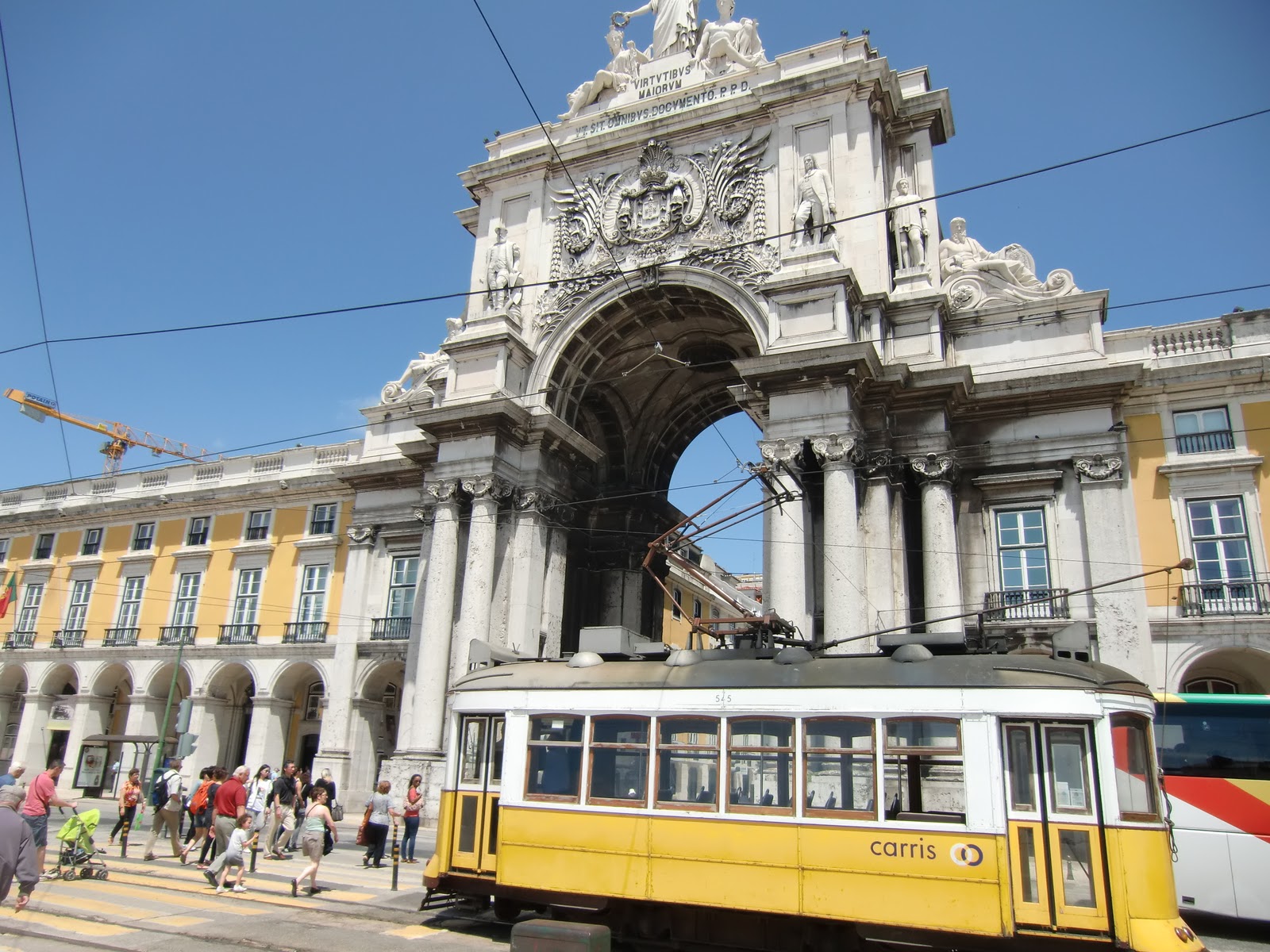
Lisbon, Portugal
In Lisbon, Uwe (a transplant from Austria) gives an offbeat, entertaining, and sometimes sarcastic view into Portugal's sprawling capital city on his dramatically named "See Lisbon Or Die" project. The tour takes you through the Chiado, Baixa and Alfama neighborhoods, and he will even ride with you on the famous No. 28 tram and advise you how to avoid getting pickpocketed.
Budapest, Hungary
Confusingly, there are two competitors with similar names in Budapest - Free Budapest Tours and Free Budapest Walking Tours, in the mornings and afternoons with meeting points near each other in central Budapest. The guides speak excellent English, and will recommend restaurants serving authentic Hungarian goulash and fashionable nightspots.
In addition to the standard city overview walk, they also offer specialty-themed tours (also for free) like the Communist Walk. Led by locals who suffered under the oppressive Soviet regime, this tour was quite informative and would interest anyone who wanted to learn more about this part of Hungary's history.
Belgrade, Serbia
In my book, Belgrade doesn't offer much in terms of sightseeing, but that's no excuse to miss out on the 2-hour free walking tour offered five days a week, meeting at Republic Square (by the statue in front of the perennially closed National Museum).
My tour was led by a lovely female student who spoke great English, and included a walk up to the old fortress. But what made the tour memorable was the huge downpour that made us all scramble for shelter underneath a pavilion inside the park, trying to huddle together while shivering from the cold rain. The thunderstorm passed and we went on with the tour without skipping a beat.

Berlin, Germany
If you needed solid evidence that Berlin has become Europe's third-most visited city, then witness the crowds that show up for Sandeman's free Berlin walking tour at 11am. In all the other cities that I've joined a free tour, the participants numbered anywhere between ten and forty people, but when I strolled towards the Starbucks near the Branderburg Gate and saw the hordes of humanity, it was quite astounding. Over a hundred people were there, and were subsequently divided into three smaller manageable groups led by a different guide. The 3 1/2 hour tour covers Berlin's highlights, including the Jewish War Memorial (pictured above), Hitler's bunker, and of course, the Wall.
For a peek inside the funky Berlin underground scene, Alternative Berlin offers their free tour twice a day, at 11am and 1pm. Be prepared to experience a lot of graffiti on this walk which does involve quite a bit of walking. Tour ends at a nice beach bar near the East Side Gallery where cheap drinks are available. To get my nightlife fix, I also took Alternative Berlin's "Anti-Pub Crawl" which went to a few "interesting" local hangouts which make Berlin the cool spot that it is.
Romania

Rome, Italy
Ah, the Eternal City. Either you love it or you hate it. Crowds, noise, pollution - they're all present. You can spend days walking on your own, seeing the sights, but why do so when there are two companies offering a free walk.
Rome Free Tour offers three different walks - Vatican, Colosseum and City Center. I took the Vatican Walk which met at the Spanish Steps and crossed the Tiber to the Vatican City. The guide (a man) was somewhat dull, and we lost a few people along the way.
In contrast, New Rome Free Tour offers only one free walking tour which concentrates on ancient Rome. I loved this tour, especially since we visited a few lesser-known churches (S. Andrea delle Fratte, anyone?) and the guide pointed out their unique features (e.g. painted-on ceiling). Not only that, after a look inside the Pantheon, he organized a coffee break at La Casa del Caffe, one of Rome's highly-rated cafes, and treated all tour participants to either an espresso or cappuccino. How I wish all free walking tours worked like this!


 Posts


